
The Rise of Low-Code/No-Code Platforms: Democratizing Software Development
Published on October 03, 2025 by durga
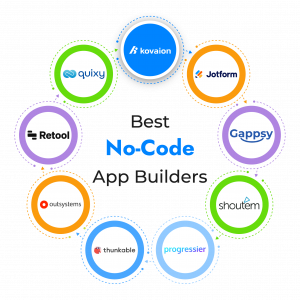
Low-code and no-code platforms are revolutionizing software development by enabling non-technical users to create applications. As these platforms mature, they're reshaping how businesses approach digital transformation.
Understanding Low-Code vs No-Code
No-Code Platforms
No-code platforms allow users to build applications using visual interfaces, drag-and-drop components, and pre-built templates without writing any code.
Low-Code Platforms
Low-code platforms provide visual development environments but also allow developers to write custom code when needed for complex functionality.
Benefits of Low-Code/No-Code
1. Faster Development
Applications can be built in days or weeks rather than months, significantly reducing time-to-market.
2. Reduced Development Costs
Lower requirement for specialized developers reduces overall project costs.
3. Democratized Development
Business users can create solutions without waiting for IT resources.
4. Rapid Prototyping
Quick creation of prototypes for validation and iteration.
5. Bridge the IT Gap
Addresses the shortage of skilled developers in the market.
Popular Platforms in 2025
Enterprise Platforms
- Microsoft Power Platform: Comprehensive suite with Power Apps, Power Automate, and Power BI
- Salesforce Lightning: Powerful platform for CRM and business applications
- OutSystems: Professional low-code platform for enterprise applications
- Mendix: Full-stack low-code platform with strong governance features
Specialized Platforms
- Webflow: Web design and development platform
- Bubble: Full-stack no-code platform for web applications
- Airtable: Database and workflow automation platform
- Zapier: Automation platform connecting different services
Limitations and Challenges
1. Vendor Lock-in
Applications built on proprietary platforms can be difficult to migrate.
2. Limited Customization
Complex business logic may not be achievable without custom code.
3. Performance Concerns
Generated applications may not be as optimized as hand-coded solutions.
4. Scalability Issues
Some platforms may struggle with high-volume or complex applications.
5. Security and Compliance
Less control over security implementation and compliance requirements.
When to Use Low-Code/No-Code
Good Use Cases:
- Internal business applications
- CRUD applications and forms
- Workflow automation
- Rapid prototyping
- Data visualization dashboards
Not Suitable For:
- High-performance applications
- Complex algorithms or calculations
- Applications requiring unique user experiences
- Systems with strict security requirements
- Applications needing deep system integration
The Future of Development
Hybrid Approach
The future likely involves a hybrid approach where low-code platforms handle routine development while professional developers focus on complex, high-value features.
AI Integration
AI-powered features are making these platforms even more accessible, with natural language interfaces and automated code generation.
Professional Developer Tools
Low-code platforms are adding more sophisticated features to attract professional developers, blurring the line between traditional and low-code development.
Best Practices
- Start with pilot projects to understand platform capabilities
- Establish governance and standards for citizen development
- Provide training and support for business users
- Plan for long-term maintenance and updates
- Consider data security and privacy implications
- Have an exit strategy to avoid vendor lock-in
Low-code/no-code platforms represent a significant shift in how software is developed. While they won't replace traditional development entirely, they're creating new opportunities for innovation and efficiency in organizations of all sizes.