
Microservices Architecture: Benefits, Challenges, and Best Practices
Published on October 07, 2025 by durga
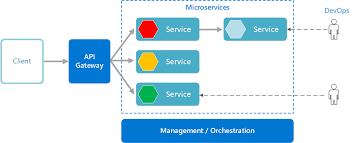
Microservices architecture has become increasingly popular for building scalable, maintainable applications. However, it's not a silver bullet and comes with its own set of challenges. Let's explore when and how to implement microservices effectively.
What are Microservices?
Microservices are an architectural approach where applications are built as a collection of loosely coupled, independently deployable services. Each service is responsible for a specific business function and communicates with others through well-defined APIs.
Benefits of Microservices
1. Scalability
Individual services can be scaled independently based on demand, allowing for more efficient resource utilization.
2. Technology Diversity
Teams can choose the best technology stack for each service, enabling innovation and preventing technology lock-in.
3. Team Independence
Small, focused teams can work on individual services without stepping on each other's toes.
4. Fault Isolation
If one service fails, it doesn't necessarily bring down the entire application.
5. Faster Deployment
Services can be deployed independently, enabling faster release cycles.
Challenges and Considerations
1. Increased Complexity
Managing multiple services, their interactions, and data consistency can be complex.
2. Network Latency
Inter-service communication over the network introduces latency compared to in-process calls.
3. Data Management
Maintaining data consistency across services without distributed transactions is challenging.
4. Testing Complexity
Integration testing becomes more complex with multiple services and their dependencies.
5. Operational Overhead
Monitoring, logging, and debugging distributed systems requires sophisticated tooling.
Best Practices for Implementation
1. Start with a Monolith
Begin with a well-structured monolithic application and extract services as you understand the domain better.
2. Domain-Driven Design
Use DDD principles to identify service boundaries based on business capabilities.
3. API-First Approach
Design APIs before implementation to ensure proper service contracts.
4. Implement Circuit Breakers
Use circuit breaker patterns to handle service failures gracefully.
5. Centralized Logging and Monitoring
Implement comprehensive logging and monitoring across all services.
6. Automated Testing and Deployment
Invest heavily in automation to manage the increased complexity.
When to Use Microservices
Microservices are beneficial when you have:
- A large, complex application with multiple teams
- Need for independent scaling of different components
- Requirements for using different technologies
- Mature DevOps practices in place
Remember, microservices are a solution to organizational and scaling problems, not just technical ones. Make sure the benefits outweigh the added complexity for your specific use case.